
Brass, Bronze & Copper: Understanding the Metals Behind Decorative Lighting
A brass chandelier, a bronze pendant and a copper wall light can appear similar in a carefully styled photograph. Yet the metals beneath their finishes may differ in composition, forming behaviour, weight, heat transfer, joining requirements and response to the environment.
For an architect or interior designer developing bespoke decorative lighting, the useful question is not simply which metal looks best. It is which material, in which form and alloy, can achieve the intended design and remain suitable for its actual use.
Brass, bronze and copper are related, but they are not interchangeable names for a golden or reddish finish. Understanding the differences helps a project team ask better questions before a reference image becomes a sample, a drawing and a production order.
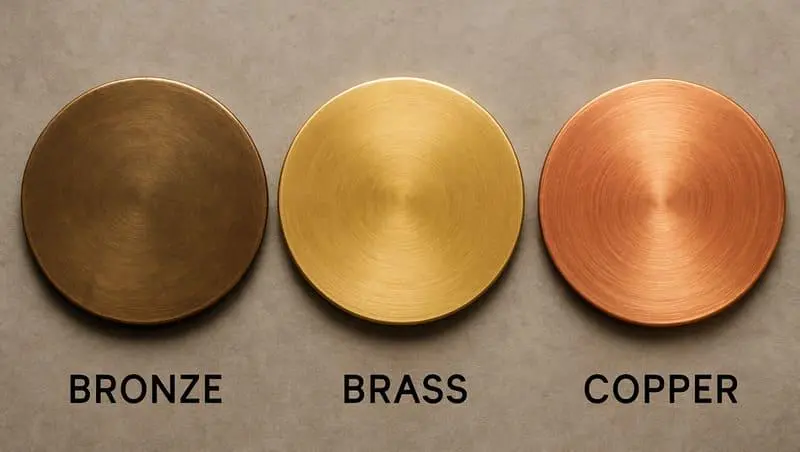
Natural metal colours vary with alloy composition, surface preparation, lighting and exposure. A photograph or colour sample alone cannot confirm the alloy.
1. First, distinguish the metal from its finish
Copper is a base metal used in relatively pure form and as the principal element in many copper alloys. It has a characteristic reddish-orange colour and very high thermal and electrical conductivity.
Brass is primarily an alloy of copper and zinc. Different compositions can produce yellow, golden, reddish or pale tones while changing strength, ductility, machinability, castability and corrosion behaviour.
Bronze traditionally refers to copper-tin alloys, but the broader family also includes alloys in which aluminium, silicon and other elements are important additions. The word bronze on a commercial quotation therefore does not identify one universal composition or set of properties.
This distinction matters because a fixture described as “antique brass” may be made from brass, another metal with a brass-coloured plated finish, or a different substrate with a decorative coating. The finish describes the surface appearance; it does not, by itself, identify the underlying material.
For a bespoke fixture, establish four things:
- The base metal and its grade or agreed composition.
- The product form, such as sheet, tube, bar, casting or fabricated assembly.
- The manufacturing route.
- The final surface treatment or coating.
The Copper Development Association's alloy resources and its technical guide to copper and copper alloys provide useful starting points. Actual selection should use the relevant grade data and applicable material standards, not a generic trade name.
2. Why composition changes performance
A metal's name tells only part of the story. Its properties depend on the elements present, their proportions, the alloy's internal structure and the processing it has undergone.
Zinc is the principal alloying element in brass. Tin is important in traditional tin bronze, while silicon and aluminium are used in other bronze families. Small additions of other elements may modify machinability, strength, wear behaviour, casting characteristics or corrosion resistance.
The effect depends on the particular alloy and process. Adding an element does not automatically improve every property.
This is why two brass components can behave differently during forming or finishing, even when they look almost identical. A grade chosen for easy machining may not be the best option for a thin, deeply formed shade. An alloy intended for casting may not suit a long, precisely bent tube.
Specify the material for the manufacturing task and service conditions, not only for its colour.
3. How metals influence form and manufacturing
The chosen metal must suit the shape the designer wants to create. A sculptural cast arm, a spun pendant shade and a slim fabricated frame place different demands on the material.
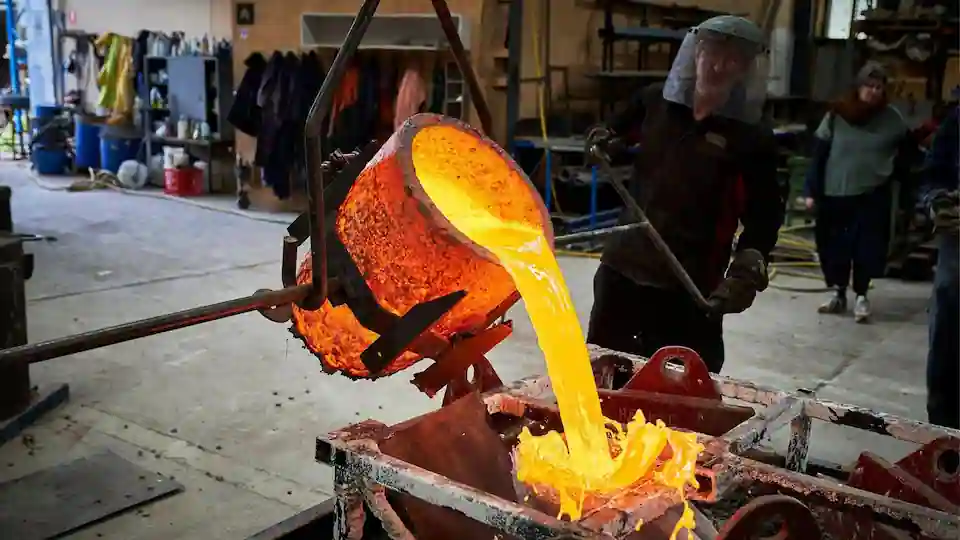
Casting
Casting allows complex shapes to be formed by pouring molten alloy into a mould. It can suit sculptural details, branching forms and components that would be difficult to assemble from many separate pieces.
Results depend on the alloy, mould, section thickness, feeding and cooling conditions, among other factors.
As metal solidifies, it contracts. Poorly managed solidification can contribute to shrinkage porosity, distortion or other defects. Very thin details may not fill correctly, while heavy sections connected to thin sections can cool at different rates.
A casting may therefore require fettling, machining and surface finishing before it meets the drawing and appearance requirements.
Forming and fabrication
Sheet metal can be cut, bent, spun or drawn. Tubes and bars can be machined or joined, and fabricated assemblies can combine several processes. These methods may suit repeated profiles, thin shades, clean geometric forms or components requiring controlled dimensions.
The choice is not simply “cast is better” or “fabricated is cheaper.” It depends on geometry, production quantity, tooling, tolerances, visible seams, finishing requirements, repeatability and repairability.
For further background, see Maven Studio's guide to metal casting and foundry processes.
4. Appearance, surface and ageing
Natural metal colour and finished appearance are different things. Polishing can make a surface brighter and more reflective; brushing creates directional texture; chemical patination can produce controlled colour changes; plating and other coatings can substantially alter the visible surface.
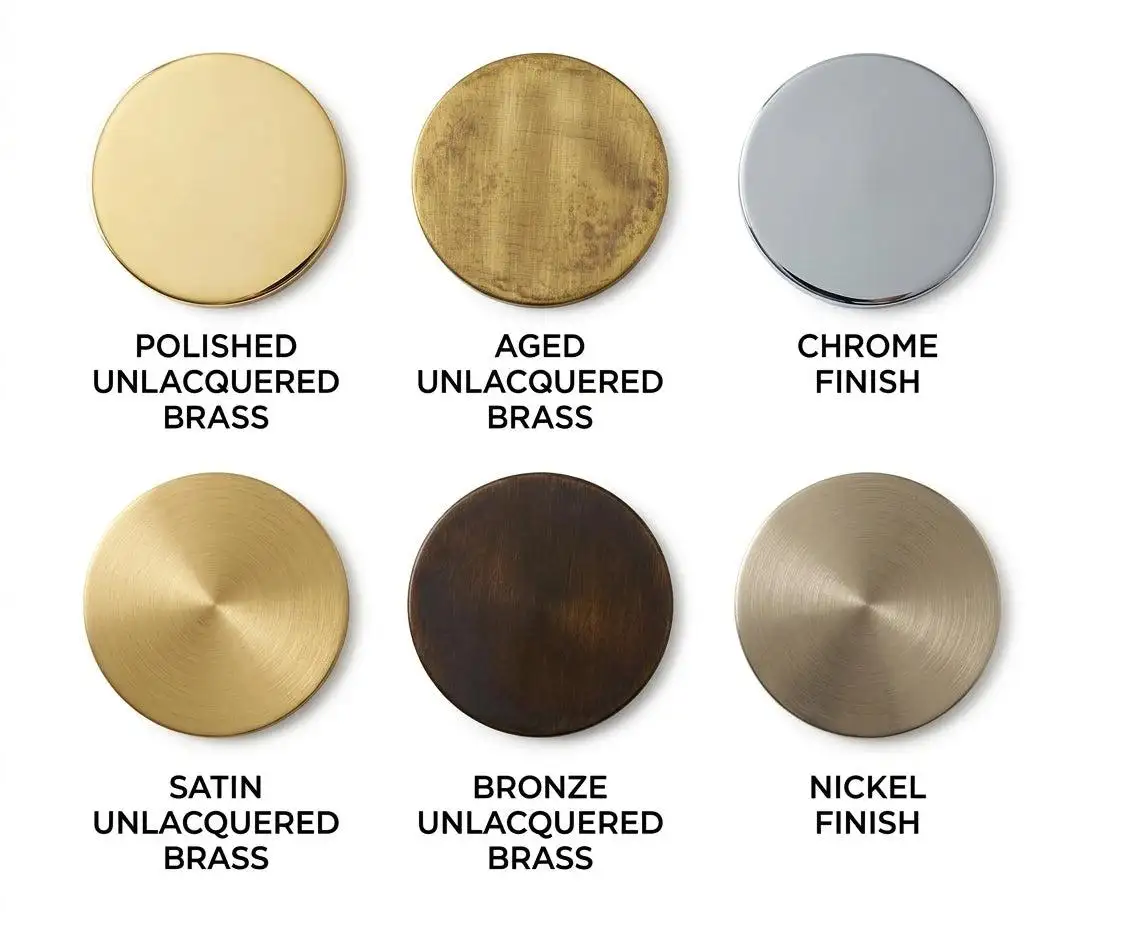
A finish can also change with handling and exposure. Fingerprints, skin oils, moisture, cleaning chemicals, airborne pollutants and chlorides can affect a surface. Uncoated copper alloys may darken or develop patina over time. A lacquer or plated system can wear, scratch or fail differently from the underlying metal.
These behaviours should not be treated as interchangeable:
- Natural ageing is the surface change that develops through exposure and use.
- Intentional patination is a controlled treatment used to create a chosen appearance.
- A protective coating is a separate layer intended to influence appearance, handling or environmental resistance.
The expected result depends on the complete system: substrate, preparation, treatment or coating, geometry, exposure and maintenance. A sample that looks right under showroom lighting does not prove how the installed fixture will look after years of use.
A useful research example is Goidanich and colleagues' study of brass and copper exposed at urban sites in Milan, Stockholm and Madrid. It examined how patina evolution, appearance, corrosion and metal release varied with alloy and environmental conditions. The lesson is not that every fixture will age in the same way, but that composition and exposure matter. Read the study in Science of the Total Environment.
For detailed comparisons of surface treatments, see Maven Studio's guide to PVD, electroplating and lacquer. Patina and corrosion mechanisms warrant a separate technical article.
5. Weight and heat: two properties that affect the whole fixture
Copper and its alloys are relatively dense engineering materials. Pure copper has a density of approximately 8.96 g/cm³ near room temperature; brass and bronze values vary by alloy.
The finished fixture's mass, however, depends on geometry, thickness, construction and every additional component.
For a chandelier, the metal is only one part of the total. Glass, crystal, sockets, LED modules, drivers, wiring, rods, canopies and suspension hardware all contribute. Hollow sections and thin-walled parts can reduce mass compared with solid sections of similar external dimensions, but the actual design must still meet its strength and stiffness requirements.
Heat behaviour also matters. Copper conducts heat very effectively; many copper alloys conduct less, with significant differences between grades. The metal's conductivity alone does not establish whether a luminaire will operate safely. Heat dissipation depends on the complete thermal path, component placement, ventilation, LED or lamp output, driver location, enclosure geometry and operating conditions.
Temperature changes cause materials to expand and contract. In a lighting assembly, differences between metals, glass, coatings and other materials can affect clearances, joints and long components. These issues deserve attention where the design encloses heat-generating components or combines materials with different thermal behaviour.
For practical weight-estimation methods, read How to Estimate Chandelier Weight: Components, Rod Spacing and Suspension Loads. Fixture mass estimates do not replace the structural assessment of the actual support, fixing and load path.
6. Choosing a metal for the design intent
There is no universal winner. The starting point is the intended form, required finish, manufacturing method, environment and project constraints.
| Design or project requirement | What to investigate |
|---|---|
| Warm golden appearance | Confirm whether the requirement is solid brass, another alloy, or a plated or coated finish. Agree a sample and finish specification. |
| Sculptural detail or complex branching | Ask whether a suitable casting alloy and process can reproduce the geometry, and what machining and finishing will be required. |
| Thin formed shade or clean geometric profile | Investigate suitable sheet or tube grades and forming methods. Confirm springback, minimum radii and visible seam requirements with the fabricator. |
| Reddish metal character | Consider copper or an appropriate copper alloy, while deciding whether natural ageing is acceptable or the appearance must be controlled. |
| Heavy chandelier or long suspended assembly | Estimate total mass early and verify the complete suspension and building-support design. Do not choose on metal density alone. |
| Warm metal near LED modules or drivers | Coordinate the metal housing with the luminaire's thermal design and applicable product-safety requirements. |
| Hospitality or coastal exposure | Specify the actual alloy, finish system, exposure conditions, cleaning method and maintenance expectations. Do not assume that a metal name guarantees corrosion performance. |
These are starting points for evaluation, not blanket material prescriptions. A suitable choice should be confirmed against the exact alloy data, the manufacturer's process capability and the fixture's intended operating environment.
7. What to confirm before production
Before approving a bespoke metal lighting sample, the project team should have clear answers to the following:
- Material identity: What is the base metal and grade, or what agreed composition is being supplied?
- Product form and process: Is the component cast, spun, formed, machined or fabricated?
- Dimensions: What are the material thicknesses, critical tolerances and mounting interfaces?
- Joining and assembly: How are components connected, and can the assembly be installed and serviced as intended?
- Surface specification: What preparation, patina, plating, lacquer or other finish is required? How will consistency be checked?
- Operating conditions: What heat sources, environmental exposure, cleaning products and maintenance practices are expected?
- Weight and support: What is the estimated mass at design stage, what is the confirmed production mass, and who verifies the building connection and suspension arrangement?
- Evidence and acceptance: Which material records, drawings, samples, inspections or tests are needed for this particular component?
Not every decorative component requires laboratory testing. The evidence should be proportionate to the part's function and the consequences of failure. Critical suspension components, electrical safety and thermal performance must be assessed by the responsible qualified parties against applicable project requirements and standards.
The Maven perspective
The most successful bespoke lighting starts by coordinating the visual idea with the material and manufacturing decisions that will make it real. Brass, bronze and copper offer broad possibilities for colour, texture and form, but the material name alone cannot guarantee a particular appearance, weight, manufacturing result or service life.
For project teams, the goal is to define the design intent, identify the relevant material and process choices, approve the finish system, and coordinate the fixture's construction and installation requirements before production is committed.
Maven Decoratives develops bespoke decorative lighting around project requirements, working with specialist manufacturing and technical partners. Our role is to coordinate design intent with material selection, fabrication information, finish expectations and practical project constraints.
The right metal is not simply the one that looks right in a sample. It is the one that can deliver the intended design through a suitable manufacturing route and perform appropriately in its intended setting.
Further reading and technical references
- Copper Development Association, Properties of Wrought and Cast Copper Alloys.
- Copper Development Association, Copper and Copper Alloys: A Technical Guide (PDF).
- Goidanich, S. et al., “Atmospheric corrosion of brass in outdoor applications: Patina evolution, metal release and aesthetic appearance at urban exposure conditions,” Science of the Total Environment (2011). https://doi.org/10.1016/j.scitotenv.2011.09.083.
- Papadopoulou, O. and Vassiliou, P., “The Influence of Archaeometallurgical Copper Alloy Castings Microstructure towards Corrosion Evolution in Various Corrosive Media,” Corrosion and Materials Degradation (2021). https://doi.org/10.3390/cmd2020013.
Technical note: This article provides general material-selection guidance. Actual alloy properties vary by grade and condition. Final material, luminaire, structural, electrical and thermal decisions must be based on the project specification, manufacturer documentation and applicable standards.