
A brass pendant, a Kansa vessel and an antique-finish decorative object may share a warm, golden appearance. Yet the metal beneath the surface, the way it has been worked and the treatment applied to it can be quite different.
Brass is primarily an alloy of copper and zinc. Kansa is commonly associated with traditional Indian bell metal, generally a copper-tin alloy. These differences influence how the materials behave during fabrication, how their surfaces respond to finishing and how their appearance changes over time.
The distinction becomes particularly interesting in decorative objects and lighting, where material is not simply a structural component. Its colour, reflectivity, texture and relationship with light all contribute to the character of the finished object.
Understanding brass and Kansa therefore involves looking beyond their familiar golden appearance. It requires a closer look at composition, craftsmanship, manufacturing methods and the interaction between a material and its environment.
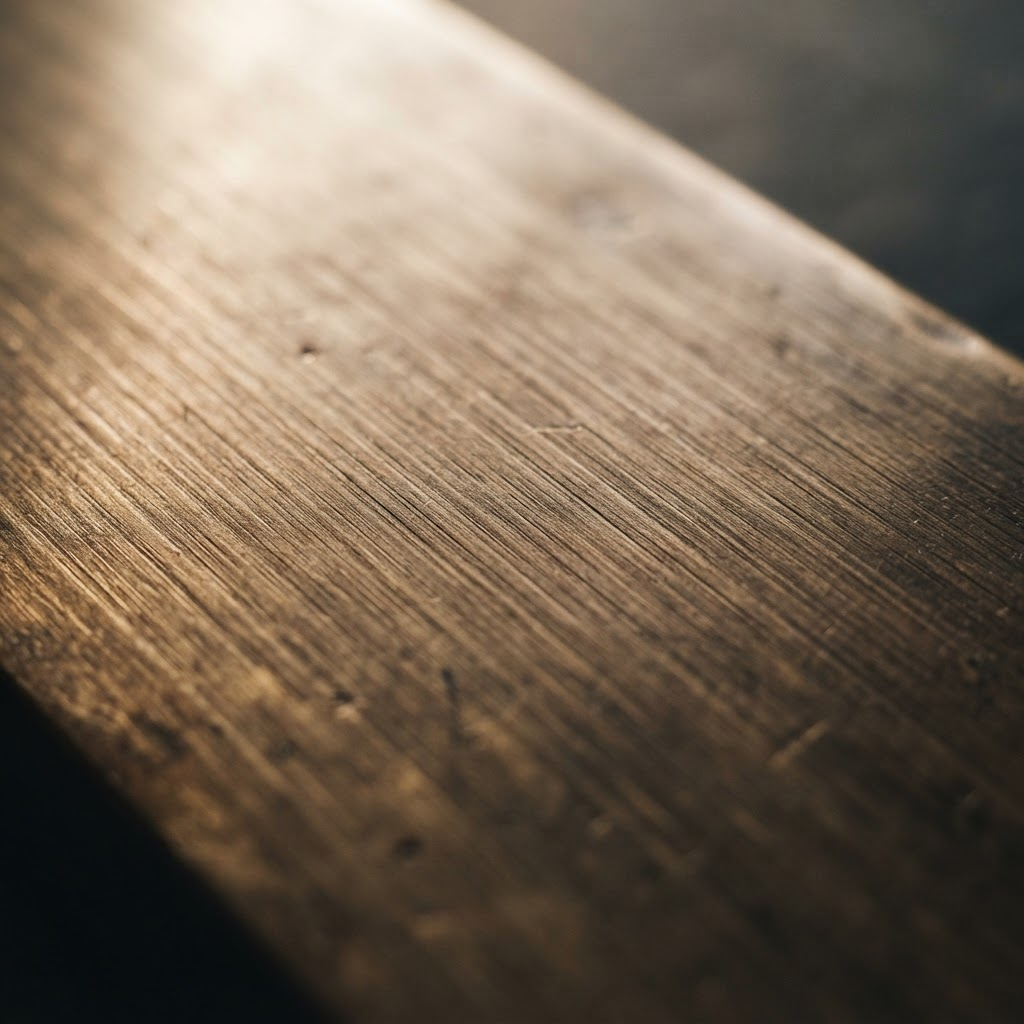
The appearance of a metal provides clues about its surface, but not conclusive evidence of its composition.
1. Brass vs Kansa: Understanding the Difference
| Characteristic | Brass | Kansa |
|---|---|---|
| Alloy family | Primarily copper and zinc | Commonly associated with copper and tin |
| Composition | Varies by grade and application | Varies by producer, tradition and product |
| Typical appearance | Yellow-gold to reddish-gold | Often muted gold to brownish-gold |
| Common working methods | Casting, rolling, forming, machining and stamping | Casting and traditional hammering, among other methods |
| Surface changes | May tarnish, darken or develop a patina | May tarnish, darken or develop a patina |
| Factors affecting performance | Alloy grade, processing, geometry and finish | Alloy composition, working method, geometry and finish |
These are broad distinctions rather than fixed rules. The properties of a finished object depend on the particular alloy, its processing history, its surface treatment and the conditions in which it is used.
The names themselves can also be misleading. A product described as “antique brass” may be made from brass with an aged surface, or it may simply reproduce the appearance of aged brass on another substrate. Similarly, “Kansa finish” does not necessarily establish that the object is made from a copper-tin alloy.
Understanding the difference between a material and its appearance is the starting point for understanding decorative metalwork.
2. What Is Brass?
Brass is a family of copper-zinc alloys rather than a single material with one fixed composition.
Many common brasses contain approximately 60–70% copper, although this is only a broad reference range. The proportions of copper and zinc vary according to the grade, and some brasses contain additional alloying elements to obtain particular properties.
These compositional differences affect how a brass behaves during manufacturing. One grade may be suitable for rolling into thin sheets, another for machining intricate components, and another for casting shapes that would be difficult to produce through sheet forming.
This is why the word brass alone does not tell the whole story.
A thin decorative shell, a turned brass component and a cast brass ornament may all be described as brass, yet their manufacturing requirements and physical characteristics can differ substantially.
Why brass composition matters
Copper contributes to brass's characteristic colour, electrical and thermal conductivity, and general material behaviour. Zinc changes the alloy's colour and influences properties such as strength, hardness and workability.
The actual result depends on the proportions of the metals and the specific grade. It is not possible to infer a brass component's precise mechanical properties from its colour alone.
For decorative applications, this becomes particularly relevant when a design combines thin sections, curved profiles, intricate detailing or multiple assembled parts. The chosen material must be compatible with the process used to produce that geometry.
3. What Is Kansa?
Kansa is a traditional Indian term commonly associated with bell metal, a copper-tin alloy. Its precise usage varies across regions, makers and product categories.
Copper forms the principal base of the alloy, while tin influences its mechanical and casting characteristics. The resulting properties depend on the composition as well as the material's processing and working history.
Kansa is closely associated with traditional Indian metalcraft, including the production of vessels and other objects through combinations of casting, hammering and finishing.
Is Kansa always 78% copper and 22% tin?
No. A copper-to-tin ratio of 78:22 is frequently cited in descriptions of certain traditional bell-metal products. Kansawalas, for example, describes this composition in its account of its own production practice.
That does not establish 78:22 as the universal composition of every product sold as Kansa. Different producers and traditions may use different compositions, and the name itself does not replace a verified material description.
Casting and hammering: two different material histories
A cast object begins with molten metal poured into a mould. Its shape is determined substantially by the mould and the subsequent finishing operations.
A hand-hammered object develops its shape through repeated mechanical working. Depending on the technique, the process may involve heating between stages to restore workability.
These methods create different relationships between the material and the finished form. They can influence thickness distribution, surface texture, dimensional variation and the visible character of the object.
A cast and a hammered vessel may have similar outlines, but their surfaces can reveal very different manufacturing histories. In decorative objects, those differences are often part of the appeal rather than defects to be eliminated.
4. Material, Finish and Appearance Are Three Different Things
The colour of a metal object is influenced by its underlying alloy, surface texture, polishing, patination, coatings, age and environment.
A polished brass surface may appear bright and reflective, while brushed brass can look softer and more subdued. A chemically aged finish can introduce darker tones and variations that would not be present on a newly polished surface.
Kansa can likewise exhibit different appearances depending on its composition, working method and finishing process.
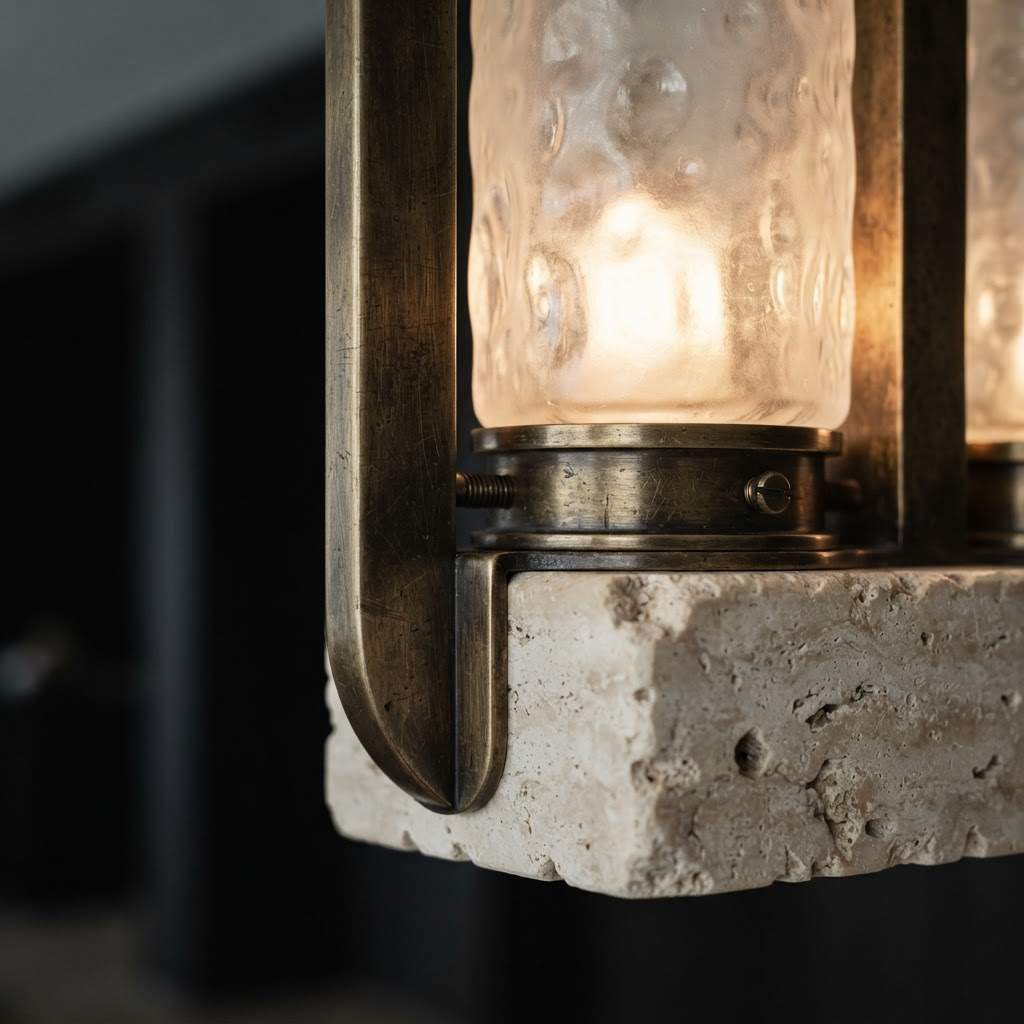
Surface texture and finishing can change the visual character of a metal as significantly as its underlying colour.
Three terms help explain these differences:
- Base material: The metal or substrate from which the object is made.
- Manufacturing process: The method through which the material is shaped, joined or assembled.
- Surface finish: The treatment that determines the final texture, colour, reflectivity and, in some cases, surface protection.
These are related, but they are not interchangeable.
A brass-coloured coating on another metal does not make the underlying component solid brass. Equally, a particular brass alloy does not automatically produce a specific antique appearance.
The distinction is especially important when comparing products that look similar in photographs. Lighting conditions, camera settings and image processing can all affect the apparent colour of a surface.
A physical sample often reveals differences in reflectivity, texture and colour variation that are difficult to judge from an image alone.
5. Five Properties That Influence Decorative Design
5.1 Formability and workability
The ability of a metal to take a particular shape depends on its composition, condition and manufacturing process.
Some brass grades are suited to rolling, stamping and forming. Others are selected for machining or casting. Choosing a grade without considering the intended operation can affect the quality and feasibility of the finished component.
Traditional Kansa work may involve casting, hammering or a combination of processes. The suitability of a particular alloy for a given method depends on its composition and condition.
For designers, the relationship between geometry and process is particularly important. A deep curve, a thin wall or an intricate profile may require a different manufacturing approach from a simple solid form.
The material and the design are therefore not independent decisions: each places constraints on the other.
5.2 Weight and structural behaviour
Copper alloys are relatively dense compared with materials such as aluminium and many plastics. However, the weight of a finished object depends on its dimensions, wall thickness, geometry and supporting structure.
Two decorative objects of similar size can have very different weights if one is a thin shell and the other is a solid casting.
This becomes relevant in suspended decorative lighting, wall-mounted objects and large sculptural installations. The weight of the complete assembly includes not just the visible metal, but also frames, fasteners, electrical components and other supporting parts.
The way that weight is distributed also matters. A large object with an uneven centre of gravity can present different mounting challenges from a smaller, symmetrically balanced one.
Material density is only one part of the structural picture.
5.3 Reflectivity and the behaviour of light
Metal surfaces interact with light in ways that depend on their colour, smoothness, texture and reflectivity.
A highly polished brass surface can produce bright highlights and sharp reflections. A brushed or satin finish generally creates softer, more dispersed reflections. A darker patinated surface may absorb more light visually and reduce the impression of brightness.
These differences can influence the atmosphere of an interior.
In decorative lighting, the metal surrounding a light source can become part of the visual experience. It may reflect illumination into the room, create highlights on nearby surfaces or contribute a warm colour impression.
The effect is not determined by the alloy alone. Surface treatment, geometry, the position of the light source and the surrounding environment all contribute.
This is one reason why the same material can appear strikingly different across two fixtures or two interior settings.
5.4 Tarnish, corrosion and ageing
Copper-based alloys can change in appearance through exposure to moisture, pollutants, handling and cleaning chemicals. The nature and rate of these changes depend on composition, surface condition, environment and protective treatment.
Tarnish and patina are related to surface changes, but they are not identical descriptions of every possible form of corrosion or deterioration.
An aged surface may be desirable in a design that draws on traditional craftsmanship or the character of naturally weathered materials. In other settings, particularly where many matching fixtures are installed, consistency may be more important than visible ageing.
Protective coatings can reduce certain surface changes, but they introduce their own considerations. Coatings can scratch, wear or deteriorate, and their performance depends on the preparation, application and conditions of use.
Outdoor, coastal and high-humidity environments introduce additional variables. The suitability of a finish in a dry interior does not automatically establish its suitability for an exposed installation.
5.5 Repeatability and repairability
A one-off decorative object is judged primarily by its individual form, finish and craftsmanship. A collection of objects for a hotel, restaurant or residential development introduces another consideration: consistency across multiple pieces.
Hand-worked objects may display natural differences in shape, texture and surface appearance. Industrially produced components can offer tighter dimensional consistency, although the resulting aesthetic may differ from that of traditional handwork.
Neither approach is inherently superior. Each serves different design intentions.
Repairability also affects the long-term character of a product. An object made from replaceable components may be easier to maintain than one in which every element is permanently joined. The availability of matching materials and finishes can matter years after the original production.
These considerations become especially relevant when a decorative object is part of a larger architectural or interior scheme.
6. How Manufacturing Methods Shape the Result
The manufacturing process influences not only the shape of an object but also its surface, dimensional accuracy, production cost and potential for repetition.
| Manufacturing method | Typical applications | Characteristics |
|---|---|---|
| Casting | Sculptural forms and complex shapes | Can accommodate intricate geometry; surface quality and dimensional accuracy depend on the process and finishing |
| Hammering or forging | Hand-worked forms and traditional objects | Can create distinctive surface character and variations associated with the working method |
| Sheet forming | Curved shells, covers and shaped sheet components | Useful for relatively thin sections; results depend on material grade, thickness and forming geometry |
| Machining | Components requiring defined dimensions or detailed features | Offers control over geometry; material suitability and tool marks remain relevant |
| Joining and assembly | Objects constructed from multiple components | Allows complex constructions; joint design, alignment and visible seams influence the result |
| Polishing and brushing | Surfaces requiring defined reflectivity and texture | Changes surface appearance and may reveal or conceal different aspects of the underlying material |
| Patination and coating | Aged appearances or treated surfaces | Can create particular colours and surface effects; consistency, wear and maintenance vary by system |
These processes are often combined. A decorative fixture, for example, may use machined fittings, a fabricated metal frame, cast ornamental components and a separately treated surface finish.
The final object is the result of the entire sequence rather than a single manufacturing operation.
Production quantity also influences the choice of process. A method that works well for a unique piece may become difficult or expensive to repeat across a large batch. Conversely, a process designed for repeatability may not reproduce the small variations valued in hand-crafted work.
A successful manufacturing approach balances the intended form, material behaviour, finish, production quantity and acceptable variation.
7. India's Metalworking and Craft Traditions
India's metalworking landscape includes traditional craft practices, specialist workshops and industrial component manufacturing. These different capabilities coexist, although they do not necessarily serve the same markets or production requirements.
Traditional craft and bell metal
- Kantilo and Balakati, Odisha: Associated with traditional bell-metal and brass craft.
- Sihor, Gujarat: Associated with traditional metalworking, including bell-metal work described by some producers.
- Bankura, West Bengal: Known for traditional metal crafts and distinctive forms of metalwork.
Traditional craft practices often preserve techniques, surface qualities and forms that are difficult to reproduce through entirely industrial methods. The value of the finished object may lie partly in the marks of the process itself.
Brass and component manufacturing
- Jamnagar, Gujarat: Has a substantial brass-component and engineering-manufacturing ecosystem.
- Moradabad, Uttar Pradesh: Widely associated with metal handicrafts, decorative objects and export-oriented craft production.
- Aligarh, Uttar Pradesh: Has metalworking and hardware-related manufacturing activity.
These locations illustrate the diversity of India's metalworking capabilities. A traditional craft workshop, a decorative metalware producer and an engineering component manufacturer may all work with metals, but their equipment, processes and quality-control systems can be very different.
Some decorative products combine these capabilities. A component may be industrially fabricated, hand-finished in a specialist workshop and assembled with parts produced elsewhere.
The broader point is that manufacturing capability is specific to the process, product and production scale—not simply the material or the location.
8. Material Selection in Decorative Objects and Lighting
Material decisions become more complex when a metal is part of a larger designed object.
Consider a pendant light with a metal frame and several decorative elements. Its appearance depends on the relationship between the frame, the surface finish, the shape and distribution of the elements, and the light source.
A polished surface may create stronger highlights, while a satin surface can produce a more restrained appearance. A heavier solid component may affect the support structure, whereas a thin formed shell may offer a different balance between weight and geometry.
The design also has a practical life beyond its initial appearance. Installation access, cleaning, replacement of components and the availability of compatible finishes can affect how well an object performs over time.
These relationships are not unique to lighting. They also apply to furniture fittings, wall-mounted objects, decorative panels, handles, sculptural pieces and other architectural metalwork.
From a visual reference to a physical object
A sketch or photograph communicates appearance, but it rarely communicates every detail needed to reproduce an object.
A reference image may not reveal the wall thickness, internal support, joining method, actual material, surface treatment or way in which the object is attached to a building.
Turning the reference into a physical object therefore involves resolving several connected questions: what the object is made from, how its geometry can be achieved, how the parts fit together and how the intended appearance can be reproduced.
This is where material knowledge and manufacturing knowledge meet. A visually convincing design still needs a feasible construction, an appropriate material and a finish suited to its intended environment.
Frequently Asked Questions
Is Kansa the same as brass?
No. Brass is primarily a copper-zinc alloy, while Kansa is commonly associated with copper-tin bell metal. Their compositions, manufacturing methods and properties can differ.
Is Kansa the same as bronze?
Bronze is a broad category of copper alloys, traditionally associated with copper and tin. Kansa is a traditional term commonly used for bell metal in India. The terms can overlap in general descriptions, but the actual composition of a product is more informative than its name alone.
Is all Kansa made from 78% copper and 22% tin?
No. This ratio is cited for certain traditional products and by some producers. It should not be treated as a universal specification for every object sold as Kansa.
Which is harder, brass or Kansa?
There is no universal answer. Hardness and other mechanical properties depend on the specific alloy, its processing and the property being measured. A general material name is not sufficient to establish a numerical comparison.
Can brass and Kansa be distinguished by colour?
Not reliably. Alloy composition, surface texture, polishing, patination and coatings can produce overlapping appearances. Visual inspection alone cannot conclusively establish composition.
Does brass tarnish over time?
Yes. Brass can tarnish or change colour depending on its composition, environment and surface treatment. The rate of change varies, and protective coatings may require maintenance.
Which is better for decorative lighting?
Neither is universally better. The choice depends on the intended appearance, geometry, manufacturing method, weight, environment, maintenance requirements and production quantity. Both material properties and surface treatment contribute to the final result.
Further Reading and Technical References
The following resources offer additional information about traditional copper alloys, cookware, manufacturing practices and material standards. Producer descriptions are useful for understanding their own products and methods, but should not be treated as universal specifications for every alloy.
- Brass Globe: Kansa vs Brass — What Is the Difference?
- Kansawalas — Official Website
- Kansawalas — About Us
- Zishta: Product Detail Documents — Bronze Cookware
- Zishta: Traditional Kalai Art and Cookware Care
- Zishta: A Guide to Cooking with Brass Cookware
- Bureau of Indian Standards — Standards Portal
- Bureau of Indian Standards — Know Your Standard
This article is intended for general educational purposes. Where composition or performance is critical, material declarations, applicable standards and appropriate testing provide a more reliable basis than a traditional name or visual appearance alone.